Table of Contents
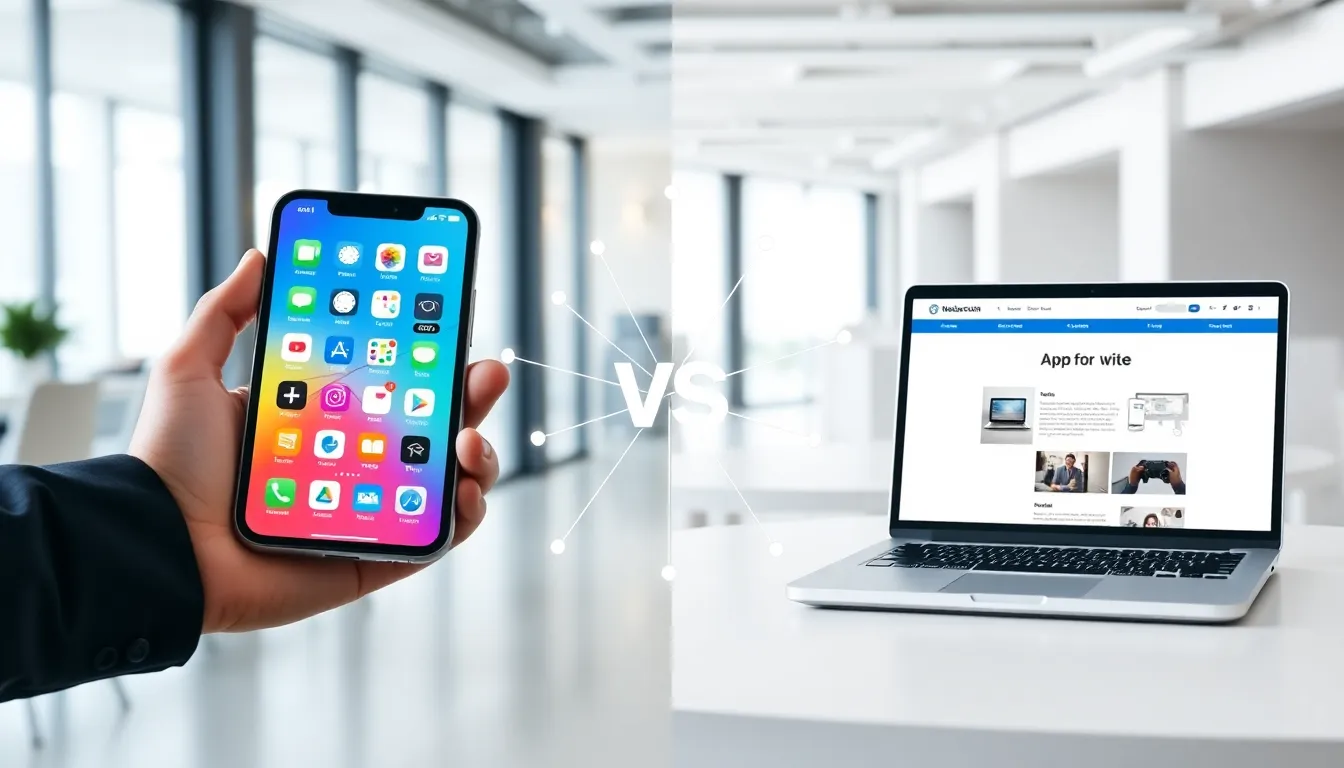
ToggleApps vs. websites, it’s a decision every business and developer faces at some point. Both serve as digital touchpoints, but they work in fundamentally different ways. An app lives on a user’s device. A website lives on the internet, accessible through a browser. Understanding these differences helps people make smarter choices about where to invest time, money, and resources. This guide breaks down the core distinctions between apps and websites, explains when each option makes sense, and offers practical guidance for choosing the right path.
Key Takeaways
- Apps vs websites differ fundamentally: apps live on devices and offer speed, offline access, and hardware integration, while websites are browser-based and instantly accessible.
- Choose an app when you need frequent user engagement, offline functionality, push notifications, or access to device features like cameras and GPS.
- Websites are better for content distribution, broad reach, budget-conscious projects, and situations requiring rapid updates without app store approval.
- Apps outperform websites in speed and responsiveness but require platform-specific development and higher investment.
- A hybrid approach—using a website for discovery and an app for power users—balances reach with deeper engagement.
- Progressive web apps (PWAs) offer a middle ground, providing some app-like features while still running in a browser.
What Are Apps and Websites?
An app (short for application) is software designed for a specific platform. Users download apps from stores like the Apple App Store or Google Play. Once installed, apps run directly on a smartphone, tablet, or computer. They can work offline, access device features like cameras and GPS, and store data locally.
A website is a collection of web pages hosted on a server. Users access websites through browsers like Chrome, Safari, or Firefox. Websites don’t require installation. They update instantly when changes are made on the server side.
Apps vs. websites differ in how they’re built too. Apps typically use platform-specific languages, Swift for iOS, Kotlin for Android. Websites use HTML, CSS, and JavaScript. Some businesses create both: a website for broad reach and an app for deeper engagement.
There’s also a middle ground called progressive web apps (PWAs). These are websites that behave like apps. They can send push notifications and work offline. But, they still run in a browser and can’t fully access device hardware the way native apps can.
Understanding these basic definitions sets the stage for comparing apps vs. websites in more detail.
Core Differences Between Apps and Websites
Performance and User Experience
Apps generally outperform websites in speed and responsiveness. Because apps store data locally and run on the device’s processor, they load faster. Animations feel smoother. Transitions happen without delay.
Websites depend on internet speed and server response times. A slow connection means a slow experience. Even well-optimized websites can’t match the snappiness of a native app.
User experience differs too. Apps offer more personalization options. They remember preferences, send push notifications, and integrate with device features. A fitness app can track steps using the phone’s accelerometer. A website can’t do that.
That said, websites have improved significantly. Modern sites using responsive design adapt well to different screen sizes. They’re easier to update and maintain. Changes go live immediately without requiring users to download updates.
When comparing apps vs. websites for user experience, apps win on depth and engagement. Websites win on convenience and accessibility.
Accessibility and Availability
Websites are more accessible by default. Anyone with a browser can visit a website, no download required. This makes websites ideal for reaching new audiences. Search engines index websites, driving organic traffic.
Apps require an extra step. Users must find the app in a store, download it, and install it. That friction reduces casual visitors. But users who do install an app tend to be more committed.
Availability differs between apps vs. websites too. Websites work on any device with a browser. Apps are platform-specific. An iOS app won’t run on Android without a separate version.
Cross-platform frameworks like React Native and Flutter help. They allow developers to write code once and deploy to multiple platforms. But these solutions involve trade-offs in performance and access to native features.
For global reach and discoverability, websites have the edge. For loyal users who want a dedicated experience, apps deliver more value.
When to Choose an App Over a Website
Certain situations call for an app over a website. Here’s when an app makes sense:
- Frequent use cases: If users interact daily or multiple times per week, an app provides faster access. Social media platforms, banking, and messaging apps benefit from this model.
- Offline functionality: Apps work without internet. A note-taking app, language learning tool, or game can function in airplane mode. Websites can’t offer the same offline experience.
- Device integration: Apps access cameras, microphones, GPS, contacts, and sensors. A photo editing app needs camera access. A navigation app needs GPS. These features require native capabilities.
- Push notifications: Apps send alerts directly to users. This drives engagement and re-engagement. Websites can use browser notifications, but adoption rates are lower.
- Performance-critical applications: Games, video editing tools, and AR experiences demand high performance. Apps handle graphics-intensive tasks better than websites.
Apps vs. websites comparisons often favor apps for these high-engagement, feature-rich scenarios. The investment in app development pays off when the use case demands it.
When a Website Is the Better Option
Websites make more sense in several common situations:
- Content distribution: Blogs, news sites, and documentation work best as websites. Search engines index this content, bringing in readers organically.
- Low-frequency interactions: If users visit occasionally, say, to check business hours or read a policy, a website serves them well. No download needed.
- Budget constraints: Building and maintaining a website costs less than developing apps for multiple platforms. Small businesses often start with a website and add an app later.
- Rapid updates: Websites update instantly. Change a price, fix a typo, or add a new page, users see changes immediately. App updates require store approval and user action.
- Broad reach: Websites work on any device. They don’t exclude users based on operating system. For maximum accessibility, websites win.
In the apps vs. websites debate, websites offer simplicity and reach. They’re the default choice for businesses starting out or those with informational goals.
Some companies use both. A website handles discovery and information. An app serves power users who want deeper features. This hybrid approach balances reach with engagement.