Table of Contents
ToggleVirtual reality trends 2026 point toward a year of significant change. The technology is moving beyond gaming and novelty into mainstream adoption. Companies are investing billions in new hardware, software, and enterprise solutions. Healthcare providers are testing VR for therapy and surgical training. AI is reshaping how people interact with virtual environments.
This article covers the key virtual reality trends 2026 will bring. Readers will learn about hardware improvements, AI integration, social platforms, workplace tools, and healthcare applications. Each section examines what’s coming and why it matters.
Key Takeaways
- Virtual reality trends 2026 show VR hardware finally meeting user expectations with lighter headsets, 4K-per-eye displays, and up to four hours of battery life.
- AI integration is transforming VR through smarter NPCs, generative content creation, and personalized experiences that adapt to individual users.
- Social VR platforms are maturing with expressive avatars, live events attracting millions, and cross-platform interoperability replacing walled ecosystems.
- Enterprise adoption is accelerating as businesses use VR for training, remote collaboration, and customer engagement with measurable ROI.
- Healthcare leads as a major driver of virtual reality trends 2026, with applications in surgical training, pain management, and mental health therapy gaining regulatory approval.
- Developers and businesses that ignore VR and AI integration risk falling behind as the technology shifts from novelty to mainstream necessity.
Advancements in VR Hardware and Display Technology
Hardware remains the foundation of every virtual reality experience. In 2026, manufacturers are pushing boundaries on weight, resolution, and comfort.
Headset weight is dropping. The latest devices weigh under 400 grams, a significant reduction from earlier models. This makes extended use practical for gaming, work, and training sessions. Battery life is also improving, with some standalone headsets reaching four hours on a single charge.
Display technology is seeing major upgrades. Pancake lenses are now standard in mid-range devices. These lenses reduce bulk while maintaining sharp visuals. Many 2026 headsets feature 4K resolution per eye, delivering crisp text and detailed environments. Some premium models are experimenting with 8K panels.
Passthrough quality is another focus area. Mixed reality experiences rely on cameras that show the real world inside the headset. Color passthrough with minimal latency is becoming standard. Users can switch between full VR and mixed reality without removing their device.
Eye tracking and foveated rendering are gaining ground. Eye tracking lets the headset know where users look. Foveated rendering then prioritizes graphics processing for that area. This reduces hardware demands and enables better visuals on less powerful chips.
Wireless connectivity continues to improve. Wi-Fi 7 support allows high-bandwidth streaming from PCs to headsets without cables. This removes a major friction point for PC VR users who want freedom of movement.
Virtual reality trends 2026 show hardware finally catching up to user expectations.
AI-Powered Virtual Experiences
Artificial intelligence is transforming virtual reality in 2026. AI tools now power everything from character behavior to content creation.
NPC interactions are becoming more natural. AI-driven characters respond to voice commands and adapt to user behavior. They remember previous conversations and adjust their responses. This creates more immersive games and training simulations.
Generative AI is changing content creation. Developers use AI to build 3D environments, textures, and objects faster than ever. Some platforms let users describe a scene in plain language. The AI then generates a functional virtual space within minutes. This democratizes VR development and opens doors for smaller creators.
Voice control is getting smarter. AI assistants inside VR respond to complex requests. Users can ask for help, request changes to their environment, or search for content using natural speech. Accuracy rates now exceed 95% in most languages.
Personalization is another AI application. VR platforms analyze user preferences and behavior. They then recommend experiences, adjust difficulty levels, and modify environments to match individual tastes. This makes each session feel customized.
Virtual reality trends 2026 show AI as a core technology, not just an add-on. Developers who ignore AI integration risk falling behind.
Social and Collaborative VR Platforms
Social VR is maturing in 2026. Platforms are moving beyond simple hangouts into structured communities and events.
User avatars are more expressive. Full-body tracking captures gestures, posture, and subtle movements. Facial tracking translates real expressions onto virtual faces. These features make conversations feel more natural and reduce the “uncanny valley” effect.
Live events are growing. Concerts, conferences, and sports broadcasts attract millions of VR viewers. Artists perform in virtual venues that hold unlimited attendees. Companies host product launches and shareholder meetings in VR spaces.
Collaboration tools are improving. Teams design products, review documents, and brainstorm ideas in shared virtual rooms. Spatial audio makes group discussions manageable. Users hear voices from the direction of the speaker, just like in real life.
Cross-platform play is expanding. Users on different headsets can join the same experiences. This breaks down barriers between Meta, Sony, Apple, and other ecosystems. Virtual reality trends 2026 favor interoperability over walled gardens.
Monetization options are diversifying. Creators sell virtual goods, host paid events, and offer subscription-based content. Some platforms share advertising revenue with popular creators. The social VR economy is growing into a multi-billion dollar market.
Enterprise and Workplace Applications
Businesses are adopting VR at a faster pace in 2026. The technology delivers measurable returns in training, collaboration, and customer engagement.
Training programs lead enterprise adoption. VR simulations teach employees how to operate machinery, handle emergencies, and interact with customers. Studies show VR trainees retain information longer than those using traditional methods. Companies report fewer on-the-job accidents after implementing VR safety training.
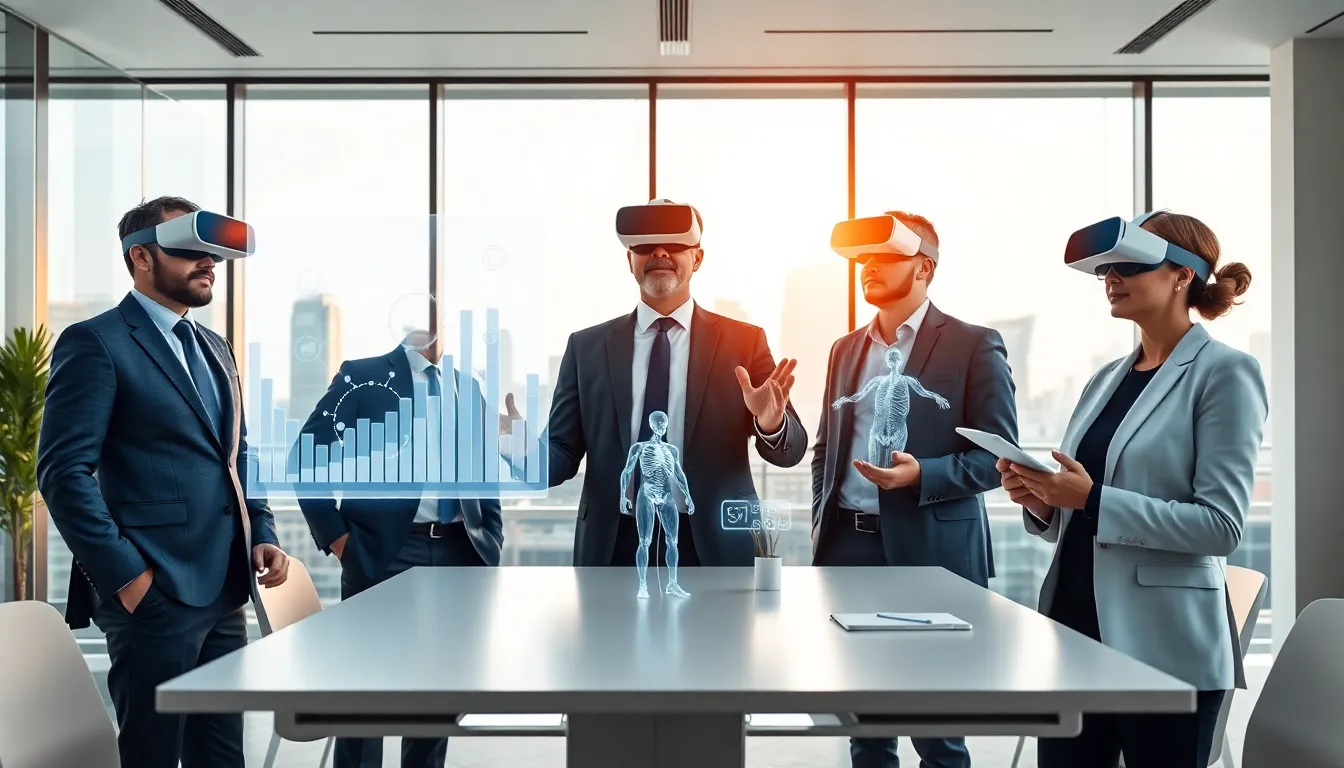
Remote collaboration is another growth area. Distributed teams meet in virtual offices and conference rooms. They manipulate 3D models, annotate documents, and whiteboard ideas together. VR meetings feel more engaging than video calls because participants share a sense of presence.
Retail and real estate use VR for customer experiences. Shoppers browse virtual showrooms and try products before buying. Homebuyers tour properties from anywhere in the world. Car dealerships let customers configure and “sit inside” vehicles virtually.
Virtual reality trends 2026 show enterprise spending outpacing consumer spending in some markets. IT departments are building VR infrastructure, hiring specialists, and creating internal content libraries. This institutional investment signals long-term confidence in the technology.
Healthcare and Therapeutic VR Innovations
Healthcare is one of the most promising sectors for virtual reality in 2026. Applications range from surgical training to mental health treatment.
Medical training uses VR extensively. Surgeons practice procedures on virtual patients before operating on real ones. Medical students explore 3D anatomy models. Nurses rehearse emergency protocols in simulated hospital environments. These programs reduce errors and build confidence.
Pain management is a growing application. Hospitals use VR to distract patients during painful procedures. Studies show VR reduces perceived pain by 24% on average. Some burn units now consider VR a standard part of wound care.
Mental health treatment benefits from VR exposure therapy. Patients confront phobias, trauma, and anxiety in controlled virtual settings. Therapists adjust intensity gradually. Research shows strong outcomes for conditions like PTSD, social anxiety, and specific phobias.
Physical rehabilitation programs use VR to motivate patients. Games and exercises make therapy sessions more engaging. Patients complete more repetitions and report higher satisfaction. Clinics track progress through data collected during sessions.
Virtual reality trends 2026 position healthcare as a major driver of adoption. Regulatory approval for therapeutic VR applications is accelerating. Insurance companies are beginning to cover some VR treatments.
The technology is moving from experimental to essential in clinical settings.