Table of Contents
ToggleVirtual reality has moved from science fiction into everyday life. What is virtual reality, exactly? It’s a technology that places users inside a computer-generated environment. Instead of watching a screen, people experience content as if they’re actually there.
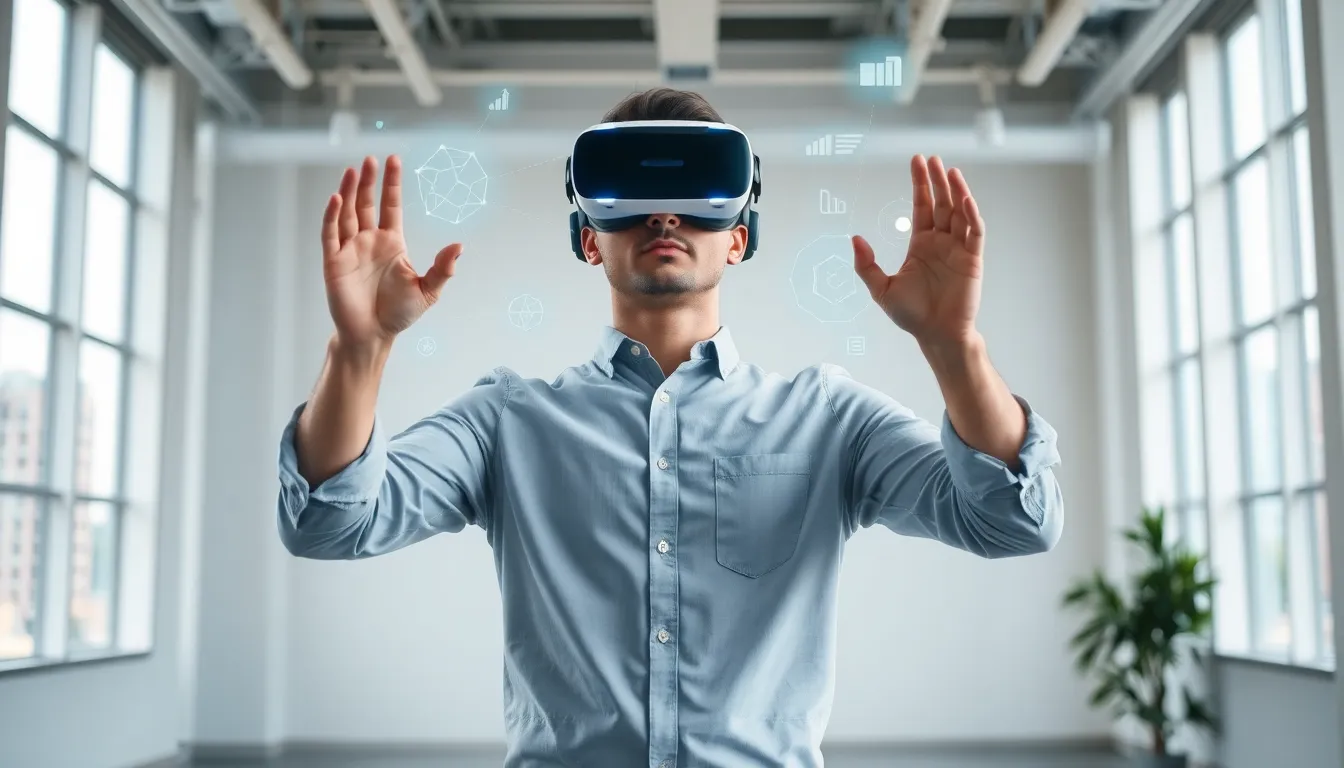
VR headsets block out the physical world and replace it with digital visuals. Sensors track head movements and adjust the view in real time. The result feels immersive, users can look around, interact with objects, and feel present in spaces that don’t physically exist.
This guide explains how virtual reality works, the different types available, and where people use VR today. It also covers the benefits and current limitations of the technology.
Key Takeaways
- Virtual reality is a technology that immerses users in computer-generated environments using headsets, motion tracking, and spatial audio.
- VR experiences range from non-immersive (standard screens) to fully immersive systems that cover your entire field of vision.
- Beyond gaming, virtual reality is transforming healthcare, education, real estate, and professional training by enabling safe, hands-on practice.
- VR headsets use dual screens, motion sensors, and high refresh rates to create a convincing 3D world that responds to your movements.
- Current limitations include high equipment costs, potential motion sickness, and the need for physical space to move freely.
- Virtual reality improves learning retention and makes dangerous or expensive training scenarios accessible without real-world risks.
How Virtual Reality Works
Virtual reality relies on hardware and software working together. The hardware creates the illusion. The software generates the content users see and hear.
VR Headsets
A VR headset is the main piece of equipment. It contains two small screens, one for each eye. These screens display slightly different images to create depth perception. The brain interprets these images as three-dimensional space.
Modern headsets include motion sensors. Accelerometers detect tilts and turns. Gyroscopes measure rotation. When a user moves their head, the sensors send data to the computer. The display updates instantly to match the new viewing angle.
Tracking Systems
Some virtual reality systems track more than head movement. External cameras or sensors monitor the user’s position in a room. This allows people to walk around within the virtual space.
Hand controllers add another layer of interaction. Users can grab, throw, and manipulate virtual objects. Haptic feedback, small vibrations, makes these actions feel more real.
The Software Side
VR software renders 3D environments in real time. Graphics engines calculate lighting, shadows, and textures for each frame. High refresh rates (90 Hz or more) prevent motion sickness and maintain the illusion.
Audio plays a critical role too. Spatial sound changes based on head position. If a user turns left, sounds from the right become quieter. This adds to the sense of presence in the virtual world.
Types of Virtual Reality Experiences
Not all virtual reality experiences are the same. They range from basic to fully immersive, depending on the hardware and purpose.
Non-Immersive VR
Non-immersive virtual reality uses standard screens, monitors or TVs. Users interact through keyboards, mice, or game controllers. Video games like flight simulators fall into this category. The experience feels engaging but doesn’t block out the real world.
Semi-Immersive VR
Semi-immersive systems provide a partial virtual experience. Users might view content on large screens or projection systems. Training simulators for pilots and drivers often use this approach. The environment feels more realistic than a desktop setup, but users remain aware of their physical surroundings.
Fully Immersive VR
Fully immersive virtual reality delivers the complete experience. Users wear headsets that cover their entire field of vision. Motion tracking responds to every movement. High-end systems like the Meta Quest 3, Valve Index, and PlayStation VR2 offer this level of immersion.
Fully immersive VR creates the strongest sense of presence. Users genuinely feel like they’ve been transported somewhere else. This makes it ideal for gaming, therapy, and professional training.
Common Uses of Virtual Reality Today
Virtual reality has found practical applications across many industries. It’s no longer just for gamers.
Gaming and Entertainment
Gaming remains the most popular use of VR technology. Players can step inside their favorite games rather than watch from a distance. Titles like Beat Saber, Half-Life: Alyx, and Resident Evil 4 VR showcase what virtual reality gaming offers.
Virtual concerts and social platforms also use VR. Apps like VRChat let people meet in shared virtual spaces. Users create avatars and interact as if they’re in the same room.
Education and Training
Schools and companies use virtual reality to teach skills safely. Medical students practice surgeries without risking patient harm. Firefighters train in simulated burning buildings. Pilots log flight hours in VR simulators before entering real cockpits.
VR makes dangerous or expensive training scenarios accessible. Learners can make mistakes and try again without real consequences.
Healthcare
Therapists use virtual reality to treat anxiety disorders and PTSD. Exposure therapy becomes safer when patients confront fears in controlled virtual settings. Physical rehabilitation programs also incorporate VR to make exercises more engaging.
Surgeons plan complex procedures using 3D models of patient anatomy. This preparation improves outcomes and reduces surgery time.
Real Estate and Architecture
Buyers can tour homes and apartments through virtual reality without traveling. Architects show clients building designs before construction begins. These virtual walkthroughs save time and help people make better decisions.
Benefits and Limitations of VR
Virtual reality offers clear advantages, but the technology still faces challenges.
Benefits
Immersive learning: VR helps people retain information better than traditional methods. Hands-on practice in virtual environments builds skills faster.
Safe experimentation: Users can explore dangerous situations without risk. This applies to medical training, industrial safety, and military preparation.
Accessibility: Virtual reality brings experiences to people who can’t access them physically. Someone with mobility limitations can climb mountains or visit distant museums.
Engagement: VR captures attention more effectively than screens. This makes it powerful for education, marketing, and therapy.
Limitations
Cost: High-quality virtual reality equipment remains expensive. A full setup with headset, controllers, and capable computer can cost over $1,000.
Motion sickness: Some users experience nausea during VR sessions. This happens when visual movement doesn’t match physical sensations.
Physical space: Room-scale VR requires empty floor space. Not everyone has room to move freely while wearing a headset.
Content availability: The library of VR experiences continues to grow, but it’s still smaller than traditional gaming and media options.
Social isolation: Extended VR use separates people from their physical surroundings. Critics worry about its effects on real-world relationships.